
Rationale
“Art is not a mirror to reflect reality, but a hammer with which to shape it”
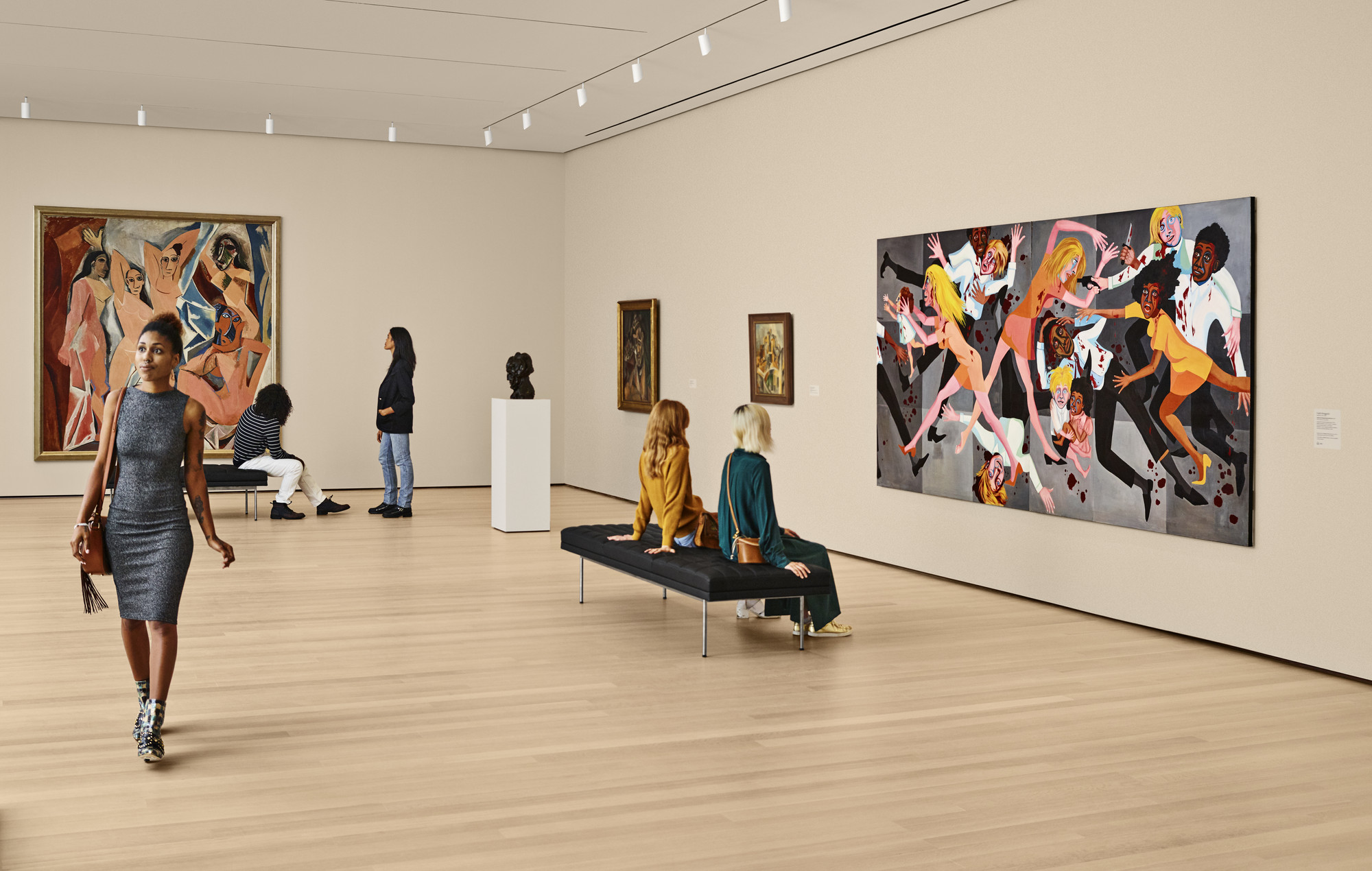
Contemporary art historian Kristine Stiles once quoted German poet and playwright Bertolt Brecht ‘s inspiring statement: “Art is not a mirror to reflect reality, but a hammer with which to shape it” in an open speech, emphasizing art’s transformative power. As carriers of this power, contemporary art museums play a pivotal role in shaping social reality by determining:
Which works and artists are represented?
What narratives are constructed?
Whose stories are told?
However, such discourse power is not equally distributed among artists of diverse identities. This underscores the importance of critically examining the inclusivity of these institutions.
By presenting clear visualizations and engaging analyses, this project seeks to uncover the lack of intersectionality in museums’ collections, explore the systemic and historical factors influencing these patterns, and examine the interplay between the 20th-century zeitgeist and the evolving contemporary art landscape.
Literature Review
Our literature review confirms an undeniable truth: white male artists dominate the collections of major U.S. museums, and the contemporary art field remains predominantly Western-centric.
However, our analysis, which integrates visualized data with interviews and articles on artist diversity, reveals a gradual shift. Non-white and female artists are receiving increased attention, but it is premature to declare that contemporary art museums fully embrace diversity. Significant challenges persist, as museums often fail to equitably represent diverse works, remaining constrained by the colonialist frameworks that historically shaped their acquisitions.
While we examined the mission statements and collection management policies of our targeted museums, which emphasize prioritizing works that represent and influence the art of our time, none explicitly identified diversity as a core value. This highlights a systemic issue. A 2012 prediction by the Census Bureau suggests that by 2043, the United States will become a majority-minority nation, with the non-Hispanic white population expected to make up only 40% of the total population by 2060. This shift implies a doubling of the total minority population, from 116 million to 241 million. If this is the future demographic reality, why haven’t museums’ collections and representation evolved to align more closely with the nation’s changing identity?
Many of our reviewed works, including articles by Kelli Morgan, Yuhan Jung, and Patricia Failing, as well as interviews with practitioners like Luis Pérez-Oramas, critique current museum practices for their lack of equity, diversity, and fair representation of marginalized artists. These authors, many of whom are prominent curators and practitioners from marginalized backgrounds, also offer hopeful perspectives. They emphasize the power of community and collaboration among scholars, curators, and artists who share similar identities. Their insights highlight how fostering stronger communication within the art industry could redirect the discriminatory landscape and drive meaningful diversification.
Significance
This project is essential for analyzing the diversity in the representation of 20th-century artists, uncovering patterns influenced by curatorial practices, institutional policies, and societal forces that have contributed to underrepresentation and bias. By examining the zeitgeist of the 20th century and its interplay with the art world, the project emphasizes the interconnectedness of art and the social landscape. Recognizing art’s transformative power as a vessel for ideas, identities, and ideologies, it deepens our understanding of how societal values and dynamics are reflected in and shaped by the evolving art landscape.
Our selected museums—the Museum of Modern Art, the Museum of Contemporary Art, the San Francisco Museum of Modern Art, and the Whitney Museum of American Art—are globally recognized institutions that epitomize the modern and contemporary art world. Their curatorial decisions not only reflect but also shape broader perceptions of art. By investigating patterns of diversity among the artists they represent, this project sheds light on systemic biases in the art world and their persistence in our time.
Central to our analysis is an intersectional perspective. We recognize that the intersections of race, ethnicity, and gender compound barriers for many artists. For example, true diversification requires more than increasing the number of female artists represented; it demands attention to the unique challenges faced by women artists of different ethnicities, who encounter distinct forms of discrimination. By highlighting the nuances of intersectionality, our project seeks to offer insights into what constitutes meaningful diversification. Ultimately, it aims to provide a fresh perspective on how museums can evolve to amplify underrepresented voices and foster more equitable representation in the future.